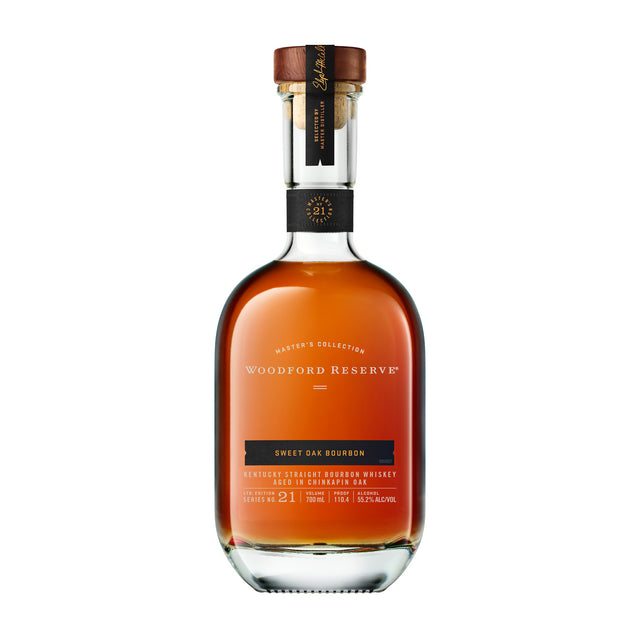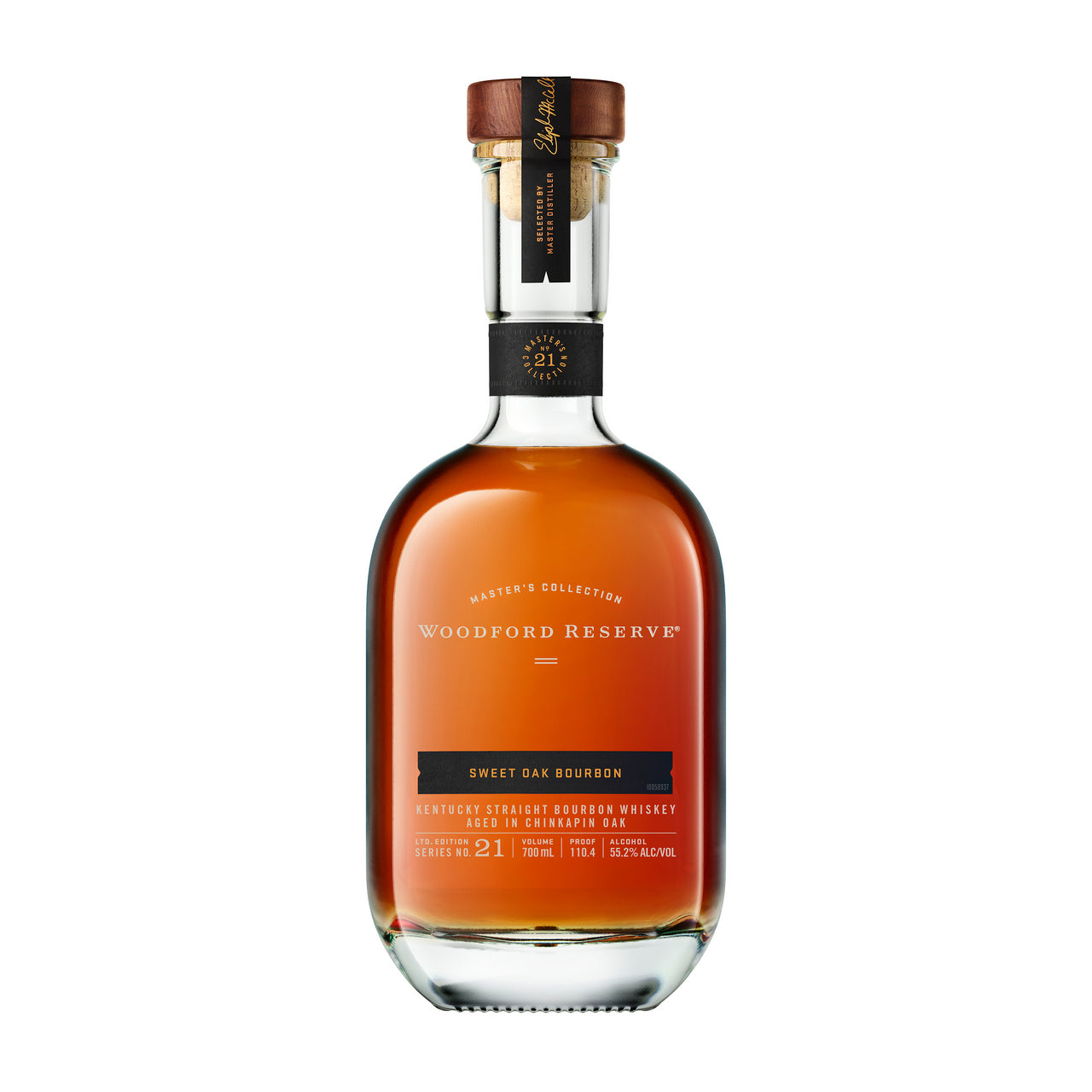
Woodford Reserve Master's Collection Sweet Oak Bourbon 700ML
Couldn't load pickup availability
*Availability may vary. Images are for reference only. Design may vary.
Description
Description
Woodford Reserve Master's Collection Sweet Oak Bourbon 700ML is a limited-edition cask-strength Kentucky bourbon aged in rare Chinkapin oak barrels, bottled at 55.2% ABV (110.4 proof). This expression stands apart within the annual Master's Collection series for its use of Chinkapin oak — a species sometimes called "sweet oak" — whose open grain structure and elevated vanillin content produce a distinctly honeyed, round character not found in standard white oak-aged bourbons.
Quick Facts: ABV: 55.2% | Origin: Kentucky, USA | Chinkapin Oak Aged | Distillery: Woodford Reserve Distillery, Versailles, KY
Production & Heritage
Woodford Reserve Distillery sits on the site of the historic Old Oscar Pepper Distillery in Versailles, Kentucky — one of the oldest distilling locations in the state, with roots dating to 1812. Now owned by Brown-Forman, the distillery is known for its copper pot still triple distillation process, unusual among Kentucky bourbon producers. Sweet Oak uses the distillery's traditional mashbill — believed to be approximately 72% corn, 18% rye, and 10% malted barley — but diverges sharply from the standard expression through its barrel program. The spirit was aged in barrels fashioned from Chinkapin oak, a scarce American oak species prized for softer tannins and higher vanillin extraction. These barrels received a lighter toast and char than Woodford's typical cooperage, allowing the wood's natural sweetness to emerge without the heavier charcoal filtration effects of deeply charred barrels.
Tasting Notes
Aroma: Mulled cherries and dark raisins rise immediately, layered with clove, nutmeg, and toasted oak. Behind the fruit and spice sits sweet leather, a touch of cedar, and deeper notes of brown sugar, molasses, and milk chocolate.
Taste: The entry is all honeyed sweetness and round oak, delivering on the Chinkapin promise with brown sugar, Toll House cookie, and baking spice up front. As it moves across the mid-palate, the character shifts — strong black tea flavors emerge alongside roasted walnut, sassafras, espresso, and anise, building warmth and astringency. The back palate turns drier and more tannic, with over-steeped tea and burnt marshmallow creating a complex tension between sweetness and bitterness.
Finish: Long and layered, beginning with dark dried cherry sweetness before pivoting into dry, spiced territory. It closes on a chewy, bittersweet chocolate note intertwined with tannic oak and lingering walnut — a finish that rewards patience and keeps evolving.
How to Drink Sweet Oak
At 55.2% ABV, this bourbon benefits most from being sipped neat, with a few drops of water to open the Chinkapin oak's vanillin sweetness and temper the tannic grip. On the rocks, the ice rounds off the astringent mid-palate and amplifies the honeyed front end.
- Old Fashioned: The cask-strength proof and pronounced brown sugar and baking spice notes hold up beautifully against simple syrup and bitters without losing definition.
- Manhattan: The dark cherry and chocolate finish pairs naturally with sweet vermouth, creating a rich, dessert-leaning cocktail.
- Boulevardier: The tannic oak backbone and espresso bitterness stand toe-to-toe with Campari, adding depth and structure.
Best For
- Bourbon collectors seeking limited-edition releases with unusual barrel programs
- Gifting a serious whiskey enthusiast who values production innovation over age statements
- Side-by-side tastings comparing wood influence across the Woodford Reserve range
- After-dinner sipping alongside dark chocolate or espresso
Frequently Asked Questions
What does Sweet Oak taste like? Sweet Oak leads with honeyed brown sugar and baking spice before shifting into bold black tea, roasted walnut, and espresso on the mid-palate. It finishes with chewy dark chocolate, dried cherry, and tannic oak.
How does Sweet Oak compare to Woodford Reserve Double Double Oaked? Double Double Oaked undergoes a second maturation in heavily toasted and lightly charred barrels made from traditional American white oak, producing a more caramelized, butterscotch-heavy profile. Sweet Oak's Chinkapin barrels with lighter toast and char deliver a distinctly different character — higher vanillin sweetness upfront but more astringent tannins and tea-like dryness on the mid-palate.
Is Sweet Oak good for sipping neat? Yes, though at 55.2% ABV it benefits from a small addition of water to unlock the honeyed Chinkapin oak sweetness and soften the tannic finish. Experienced bourbon drinkers will find the cask-strength intensity rewarding neat.
Where is Sweet Oak made? Sweet Oak is produced at the Woodford Reserve Distillery in Versailles, Woodford County, Kentucky. The distillery operates on a site that has been home to whiskey production since 1812.
What foods pair well with Sweet Oak? Dark chocolate truffles complement the chewy cocoa finish. Pecan pie mirrors the nutty, brown sugar sweetness. Smoked brisket matches the tannic oak backbone. Aged cheddar contrasts the honeyed entry with savory sharpness. Cherry clafoutis echoes the mulled cherry aroma.
What sizes does Sweet Oak come in? Sweet Oak is available as a 700ML bottle, the standard size for this Master's Collection release in most international markets.
Is Sweet Oak worth the price? Sweet Oak positions as a premium limited-edition bourbon within the Master's Collection series, which consistently commands higher prices than the Woodford Reserve core range. The use of rare Chinkapin oak cooperage and cask-strength bottling justify its placement in the premium tier for collectors and enthusiasts seeking unique barrel-influenced expressions.
Why Sweet Oak?
The defining differentiator here is barrel selection. While many limited-edition bourbons rely on extended aging or barrel finishing to create distinction, Sweet Oak takes a fundamentally different path — changing the wood species itself. Chinkapin oak is rarely used in bourbon production due to its scarcity, making this release genuinely unusual rather than merely a variation on a theme. The result is a bourbon that tastes structurally different from white oak-aged whiskey, with a higher vanillin sweetness countered by drying tannins that create a push-pull dynamic across the palate. For anyone interested in how wood type shapes bourbon character, this bottle is a case study in a glass.
Specifications
Specifications
-
Varietal/Type
-
Product of
-
Region
-
Size
-
Proof
-
Brand
Payment & Security
Payment methods
Your payment information is processed securely. We do not store credit card details nor have access to your credit card information.
New Arrivals
-
 New arrival
 -
-

-


Cutwater
Cutwater Gingerbread White Russian 4PK
In stock4PK 12OZ Cans$12.99Unit price /Unavailable -

-

-


-

 Sold out