
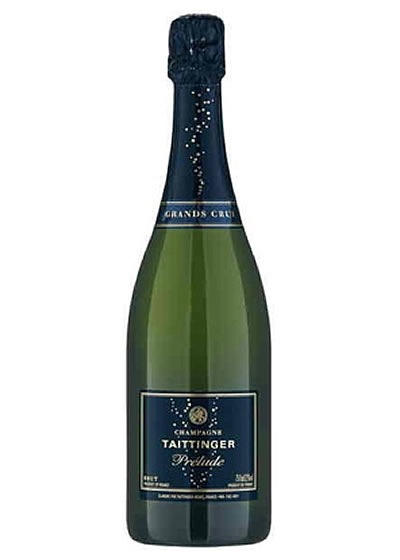
Taittinger Prelude Grand Cru
Couldn't load pickup availability
Taittinger Prelude Grand Cru
*Availability may vary. Images are for reference only. Design may vary.
Description
Description
Taittinger Prelude Grand Cru is a non-vintage Champagne sourced entirely from Grand Cru vineyards, bottled at 12.5% ABV in a standard 750ml format. Awarded 96 points by Anne Krebiehl MW for Decanter, this cuvée draws exclusively from four of Champagne's most celebrated villages and spends over five years aging on its lees — more than double the legal minimum for non-vintage Champagne.
Quick Facts: ABV: 12.5% | Origin: Champagne, France | Non-Vintage (5+ Years on Lees) | Producer: Taittinger
Production & Heritage
Taittinger, founded in 1734 and still family-controlled, ranks among the few remaining major Champagne houses under independent ownership. The Prélude Grand Cru is built from an equal blend of 50% Chardonnay and 50% Pinot Noir, sourced exclusively from Grand Cru-rated vineyards: Chardonnay from Avize and Le Mesnil-sur-Oger on the Côte des Blancs, and Pinot Noir from Ambonnay and Mailly-Champagne on the Montagne de Reims. Only first-press juice — the purest and most concentrated fraction — enters the blend, which then rests on the lees for more than five years before disgorgement, developing the layered complexity that separates this bottling from Taittinger's entry-level Brut Réserve.
Tasting Notes
Aroma: The nose opens with honeycomb and fresh biscuit, building into dried apple, lemon curd, and delicate white flowers. A faint minerality — often described as crushed chalk — lingers beneath the fruit, signaling the wine's Grand Cru pedigree.
Taste: The palate enters with bright citrus — lemon and grapefruit — that quickly broadens into richer notes of beurre bosc pear, white peach, and crème brûlée. At mid-palate, the Chardonnay's tension and the Pinot Noir's weight find a convincing equilibrium, with fine toast and a subtle strawberry tang adding dimension. The mousse is persistent and creamy without being heavy.
Finish: Long and layered, the finish returns to toasted brioche and mineral chalk, with a thread of green apple acidity that keeps everything taut. The aftertaste sustains well beyond the final sip, a hallmark of extended lees aging.
How to Drink Prélude Grand Cru
This Champagne rewards a tulip-shaped glass and a cellar-cool serving temperature around 10–12°C; slightly warmer than most non-vintage pours to let the complexity from extended aging fully express. It stands confidently on its own as an aperitif or throughout a meal. For cocktails, its structure and depth make it a compelling upgrade in a French 75, where its toast and citrus amplify the gin-lemon backbone; a Champagne Cocktail, where the biscuit notes complement the Angostura bitters and sugar; and a Kir Royale, where the wine's inherent red-berry character bridges naturally with crème de cassis.
Best For
- Celebrating a milestone anniversary or promotion with a genuinely distinguished bottle
- Gifting a Champagne enthusiast who already knows entry-level cuvées
- Pairing with a multi-course dinner featuring shellfish or poultry
- Building a personal Champagne collection that explores Grand Cru terroir
Frequently Asked Questions
What does Prélude Grand Cru taste like? It leads with bright lemon and grapefruit citrus, transitions through ripe white peach and toasted brioche at mid-palate, and finishes with persistent mineral chalk and green apple acidity. The overall impression is one of refined richness balanced by crisp tension.
How does Prélude Grand Cru compare to Moët & Chandon Impérial? Moët Impérial uses a broader sourcing base that includes Premier Cru and non-classified vineyards, and typically ages on the lees for around two to three years. Prélude Grand Cru is sourced exclusively from Grand Cru sites and spends over five years on lees, resulting in noticeably deeper toast and autolytic complexity.
Is Prélude Grand Cru good for sipping neat? Absolutely — extended lees aging gives the wine enough textural weight and aromatic development to reward unhurried, contemplative sipping on its own or alongside light canapés.
Where is Prélude Grand Cru made? It is produced by Taittinger in Reims, Champagne, France, using fruit exclusively from Grand Cru vineyards in Avize, Le Mesnil-sur-Oger, Ambonnay, and Mailly-Champagne.
What foods pair well with Prélude Grand Cru? Fresh oysters and the wine's chalk minerality are a natural match. Seared scallops with brown butter echo its toasty, creamy character. Roast chicken or guinea fowl benefit from the Pinot Noir's body. Aged Comté cheese mirrors the nutty, biscuit-like lees notes. Lemon tart ties directly into the cuvée's bright citrus backbone.
What sizes does Prélude Grand Cru come in? The standard release is a 750ml bottle; magnum formats (1.5L) may appear in limited allocations depending on vintage and market availability.
Is Prélude Grand Cru worth the price? It positions as a premium non-vintage Champagne, sitting above most houses' entry-level brut offerings but below vintage and prestige cuvées. With 96 points from Decanter and 94 from James Suckling, its critical reception supports its standing as strong value within the 100% Grand Cru category.
Why Prélude Grand Cru?
What distinguishes this cuvée is discipline: every drop comes from first-press juice, every grape from a Grand Cru vineyard, and every bottle rests on its lees for at least five years before release. That level of restraint, applied consistently across a non-vintage program, is uncommon at this price tier. Critics have responded accordingly — 96 points from Anne Krebiehl MW at Decanter, 95 from Bettanne & Desseauve, and Gold Medals from both the Sommelier Wine Awards and the Hong Kong IWSC. For drinkers ready to explore what Grand Cru terroir genuinely contributes to a Champagne blend, Prélude makes the case persuasively and without pretense.
Specifications
Specifications
-
Varietal/Type
-
Product of
-
Region
-
Size
-
Brand
Payment & Security
Payment methods
Your payment information is processed securely. We do not store credit card details nor have access to your credit card information.
New Arrivals
-
 New arrival
 -
New arrival
-
New arrival
-
 New arrival
 -
New arrival
-
-

-


Cutwater
Cutwater Gingerbread White Russian 4PK
In stock4PK 12OZ Cans$12.99Unit price /Unavailable


