
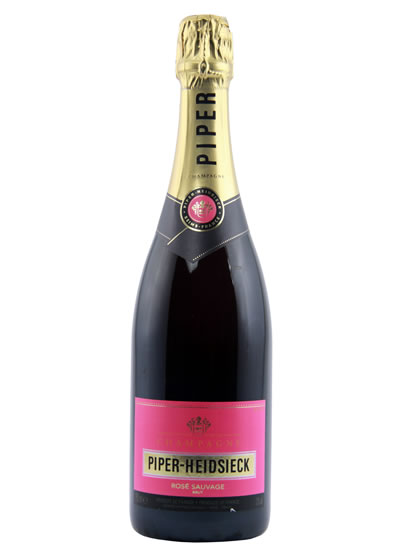
Piper Heidsieck Rose Sauvage
Couldn't load pickup availability
Piper Heidsieck Rose Sauvage
*Availability may vary. Images are for reference only. Design may vary.
Description
Description
Piper-Heidsieck Rosé Sauvage is a non-vintage rosé Champagne from Reims, France, bottled at 12% ABV in a standard 750ml format. Distinguished by an unusually high proportion of red wine — 20–25% drawn especially from the prestigious village of Les Riceys — this cuvée has earned 93 points from Wine Spectator, placing it among the most critically recognized rosé Champagnes at its level.
Quick Facts: ABV: 12% | Origin: Champagne, France (Reims) | Non-Vintage Rosé | House: Piper-Heidsieck (est. 1785)
Production & Heritage
Founded in 1785 in Reims, Piper-Heidsieck is one of Champagne's oldest and most storied houses. Rosé Sauvage is produced using the assemblage method — still red wines are blended into the base cuvée rather than achieved through skin-contact maceration. The blend typically comprises 50–55% Pinot Noir (of which 20–25% is vinified as red wine), 30–35% Pinot Meunier, and 15–20% Chardonnay, supplemented by 10–20% reserve wines for depth and consistency. That red wine proportion is notably higher than most rosé Champagnes, which contributes to the deep copper-salmon color and a more vinous, full-bodied profile than many peers.
Tasting Notes
Aroma: The nose opens with ripe red berries — strawberry and fresh raspberry — before shifting into darker tones of black cherry and grilled plum. Underneath, warm notes of toasted brioche and roses emerge with time in the glass.
Taste: The entry is generous and fruit-forward, with black cherry preserves, blackberry, and blood orange flooding the mid-palate. As it develops, pink grapefruit acidity cuts through the richness, while warm spice — Espelette pepper, tea, and a whisper of liquorice — adds complexity at the peak.
Finish: The finish is long and textured, with lingering cream, toasted nut, and a spiced orange note that slowly fades. Fine, persistent mousse carries the flavors well past the last sip.
How to Drink Rosé Sauvage
Serve chilled to around 8–10°C (46–50°F) in a white wine glass rather than a narrow flute — the wider bowl opens up the aromatic complexity. This is a rosé Champagne that rewards still, attentive sipping on its own. In a French 75, it adds berry depth and backbone that lighter rosés cannot match. A Kir Royale made with crème de mûre (blackberry) plays beautifully off the existing dark fruit character. For a less conventional serve, try it in a Champagne Cobbler over crushed ice with seasonal stone fruit — the vinous weight holds up where more delicate sparklers would wash out.
Best For
- Celebrating an anniversary or milestone dinner at home
- Gifting a Champagne lover who already knows the standard labels
- Pairing with a multi-course meal centered on duck, salmon, or charcuterie
- Summer entertaining when you want something bolder than a typical rosé pour
Frequently Asked Questions
What does Rosé Sauvage taste like? Rosé Sauvage leads with bold black cherry, blackberry, and grilled plum, layered over toasted brioche and warm spice notes like Espelette pepper and tea. It finishes long, with cream and spiced orange lingering on the palate.
How does Rosé Sauvage compare to Dom Pérignon Vintage Rosé? Dom Pérignon Vintage Rosé is a vintage-dated prestige cuvée at a significantly higher price point, typically showing more restraint and minerality. Rosé Sauvage sits in a more accessible tier but delivers a bolder, more fruit-driven profile thanks to its unusually high red wine content — making it a strong alternative for drinkers who prioritize intensity over subtlety.
Is Rosé Sauvage good for sipping neat? Absolutely — its vinous weight, complex spice, and long finish make it a rosé Champagne built for contemplative drinking rather than just casual toasting.
Where is Rosé Sauvage made? Rosé Sauvage is produced by Piper-Heidsieck, headquartered in Reims in the Champagne region of northern France. Its red wines are sourced particularly from Les Riceys, a village in the Aube renowned for its Pinot Noir.
What foods pair well with Rosé Sauvage? Seared duck breast works well, as the wine's dark fruit and spice echo the richness of the meat. Smoked salmon or gravlax mirrors its berry and citrus notes. A charcuterie board with cured meats like coppa or bresaola complements its vinous depth. Soft, creamy cheeses such as Brillat-Savarin balance the acidity, and dark chocolate–dipped strawberries make a decadent dessert pairing.
What sizes does Rosé Sauvage come in? The standard release is a 750ml bottle, which is the most widely available format.
Is Rosé Sauvage worth the price? Rosé Sauvage positions as a premium non-vintage rosé Champagne, sitting above everyday labels but below vintage-dated prestige cuvées. With a 93-point Wine Spectator rating and a production method that uses significantly more red wine than typical competitors, it delivers strong value within its tier.
Why Rosé Sauvage?
What separates Rosé Sauvage from the crowded field of rosé Champagnes is its structure. The 20–25% red wine content — sourced from Les Riceys, one of Champagne's most respected Pinot Noir villages — is substantially higher than the industry norm, giving the wine a depth and vinous intensity that most non-vintage rosés simply do not possess. Critical recognition backs this up: 93 points from Wine Spectator, 91 from Jeb Dunnuck, and 90–92 from Master of Wine Essi Avellan. For drinkers who find standard rosé Champagne too light or one-dimensional, Rosé Sauvage is the direct answer — a bottling from a house with nearly 240 years of history that treats rosé not as an afterthought but as a serious, standalone expression.
Specifications
Specifications
-
Varietal/Type
-
Product of
-
Region
-
Size
-
Brand
Payment & Security
Payment methods
Your payment information is processed securely. We do not store credit card details nor have access to your credit card information.
New Arrivals
-
 Sold outNew arrival
 -
New arrival
-

 New arrival
Winglore
Winglore Single Barrel #7 Bourbon 750ML
Very low stock750ML$94.99Unit price /Unavailable -
Sold outNew arrival
Winglore
Winglore Nickel on the Grass American Single Malt 750ML
750ML$89.99Unit price /Unavailable -
New arrival
-
 New arrival
 -
New arrival
Winglore
Winglore Bogey Dope Solo Bourbon 750ML
Very low stock750ML$99.99Unit price /Unavailable -

 New arrival


