
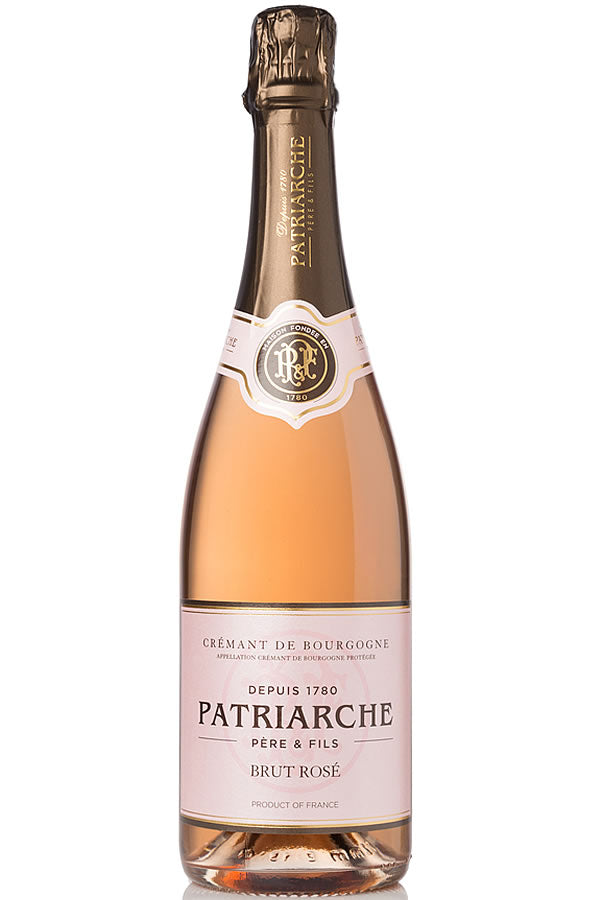
Patriarche Cremant de Bourgogne Brut Rose
Patriarche Cremant de Bourgogne Brut Rose
*Availability may vary. Images are for reference only. Design may vary.
Description
Description
Patriarche Crémant de Bourgogne Brut Rosé is a traditional-method sparkling rosé from Burgundy, France, bottled at 12% ABV in a 750ml format. Produced by Patriarche Père et Fils — one of Burgundy's oldest and most recognized négociant houses — this cuvée has earned silver medals at both the Hong Kong International Wine & Spirit Competition and The Global Masters, along with a bronze at the 2024 International Wine Challenge.
Quick Facts: ABV: 12% | Origin: Burgundy, France | Crémant de Bourgogne AOC | Producer: Patriarche Père et Fils
Production & Heritage
Patriarche Père et Fils was founded in 1780 in Beaune, the historic heart of Burgundy, making it one of the region's oldest wine houses. The Brut Rosé is produced using méthode traditionnelle — the same secondary-in-bottle fermentation employed in Champagne — with fruit sourced across three key Burgundy departments: Yonne, Côte d'Or, and Saône-et-Loire. The blend is Chardonnay-dominant at roughly 73%, supported by Gamay and Pinot Noir, with the Pinot Noir contributing structure and body while Gamay lends lightness and the wine's delicate pink hue. The cuvée rests on its lees for a minimum of 12 months before disgorgement, a maturation period that builds complexity and refines the persistent mousse.
Tasting Notes
Aroma: The nose opens with fresh red fruits — strawberry and raspberry — before yielding softer notes of peach, apricot, and a subtle yeasty character from its extended lees aging. The overall aromatic impression is bright, fruity, and inviting.
Taste: On the palate, the entry is crisp and fruit-forward with vivid red berry flavors. At mid-palate, ripe stone fruit emerges alongside a pleasant suppleness, and the wine's high acidity provides a clean, focused backbone. The mousse is fine and persistent, lending a creamy texture that balances the pronounced freshness.
Finish: The finish is brisk and refreshing, with lingering notes of tart red currant and citrus peel. It signs off with a crisp, dry snap that invites the next sip.
How to Drink Patriarche Brut Rosé
This Crémant drinks beautifully on its own as an aperitif, served well-chilled between 6–8°C. Its bright acidity and fine bubbles also make it a versatile cocktail base.
- French 75 (Rosé variation): The wine's red fruit profile and lively mousse replace traditional Champagne with a Burgundian twist, pairing naturally with gin and lemon.
- Rossini: A float of fresh strawberry purée amplifies the berry notes already present in the wine.
- Kir Royal: A dash of crème de cassis from neighboring Dijon plays off the Crémant's Burgundian character with regional harmony.
Best For
- Toasting at brunch gatherings where Champagne-method bubbles set the mood without the Champagne price tag
- Gifting to someone exploring French sparkling wines beyond Champagne
- Pairing at a summer dinner party with lighter courses and seasonal fruit
- Stocking a home bar with a versatile, food-friendly rosé sparkler
Frequently Asked Questions
What does Patriarche Brut Rosé taste like? It delivers fresh red fruit — strawberry, raspberry, and red currant — layered with stone fruit sweetness and a yeasty complexity, all framed by vibrant acidity and persistent fine bubbles.
How does Patriarche Brut Rosé compare to Simonnet-Febvre Brut Rosé Crémant de Bourgogne? Both are méthode traditionnelle Crémant de Bourgogne rosés, but Simonnet-Febvre's expression has scored higher with Wine Enthusiast at 89 points versus Patriarche's 84 points. Patriarche's Chardonnay-dominant blend tends toward lighter, fruitier character, while Simonnet-Febvre typically shows more structure and depth.
Is Patriarche Brut Rosé good for beginners? Yes — its approachable fruit-forward profile, gentle mousse, and lower alcohol (12% ABV) make it an excellent entry point into traditional-method sparkling wines without the intensity of vintage Champagne.
Where is Patriarche Brut Rosé made? It is produced by Patriarche Père et Fils, headquartered in Beaune in the Côte d'Or of Burgundy, France. The grapes are sourced from vineyards across the Yonne, Côte d'Or, and Saône-et-Loire departments within the Crémant de Bourgogne appellation.
What foods pair well with Patriarche Brut Rosé? Smoked salmon canapés benefit from the wine's bright acidity cutting through the fat. Fresh goat cheese complements the creamy mousse and tart fruit. Strawberry tarts echo the wine's red berry aromatics. Sushi and lighter shellfish dishes match its delicate body. Charcuterie boards with mild cured meats allow the Crémant's fruit and fizz to refresh the palate between bites.
What sizes does Patriarche Brut Rosé come in? The standard format is a 750ml bottle, which is the most widely available size for this cuvée.
Is Patriarche Brut Rosé worth the price? It positions as an entry-level to mid-range traditional-method sparkling rosé, competing in a value tier well below most Champagne rosés. For a Crémant de Bourgogne with 12 months of lees aging and multiple international competition medals, it represents solid quality for the category.
Why Patriarche Brut Rosé?
What separates this Crémant from the crowded sparkling rosé field is its pedigree and process. Patriarche Père et Fils has been making wine in Burgundy for over 240 years, and this cuvée draws from three distinct Burgundy departments for blending complexity. The 12-month lees aging exceeds the minimum required for the appellation and contributes to the wine's refined mousse and subtle biscuit undertones. With silver medals from both the Hong Kong IWSC and The Global Masters alongside a 2024 International Wine Challenge bronze, the Brut Rosé has earned third-party validation as a credible, enjoyable sparkling rosé that delivers Burgundian character at an accessible tier.
Specifications
Specifications
-
Varietal/Type
-
Product of
-
Region
-
Size
-
Brand
Payment & Security
Payment methods
Your payment information is processed securely. We do not store credit card details nor have access to your credit card information.
New Arrivals
-
 New arrival
 -
 New arrival
The Brewing Projekt
The Brewing Projekt Variety Mix 12Pk
Very low stock12PK 12OZ Cans$26.99Unit price /Unavailable -
New arrival
Drekker Brewing
Very low stock4PK 16OZ Cans$16.99Unit price /Unavailable -
 New arrival
 -
Sold outNew arrival
-
New arrival
Duchesse de Bourgogne
Very low stock4PK 11.2OZ$26.99Unit price /Unavailable -
Sold outNew arrival
-
Sold outNew arrival
Macallan
Macallan Harmony Collection Inspired by Fresh Coconut 750ML
750ML$189.99Unit price /Unavailable


