
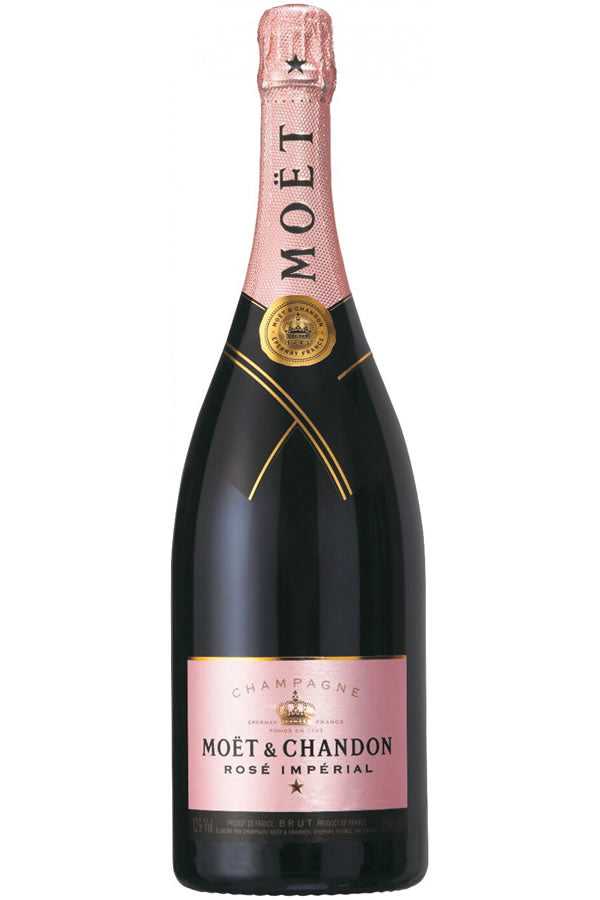
Moet & Chandon Rose Imperial 1.5L
Couldn't load pickup availability
Moet & Chandon Rose Imperial 1.5L
*Availability may vary. Images are for reference only. Design may vary.
Description
Description
Moët & Chandon Rosé Impérial 1.5L is a non-vintage rosé Champagne presented in a magnum format at 12% ABV. This expression has earned 91 points from four major publications — Wine Spectator, James Suckling, Vinous, and Wine & Spirits — along with Gold medals at the San Francisco International Wine Competition (2019), The Global Masters, and the Los Angeles International Wine Competition.
Quick Facts: ABV: 12% | Origin: Épernay, Champagne, France | Non-Vintage Rosé Champagne | Distillery: Moët & Chandon
Production & Heritage
Moët & Chandon, founded in 1743 in Épernay, is one of the world's largest and most recognized Champagne houses. Rosé Impérial is produced via the traditional méthode champenoise from a blend of 45% Pinot Noir, 40% Pinot Meunier, and 15% Chardonnay. What truly distinguishes this cuvée is the house's use of thermovinification — a controlled heat maceration technique that extracts color and fruit character from the red grape skins while deliberately keeping the wine light-bodied and approachable. According to the winemaking team, Moët is essentially the only Champagne house employing thermovinification at this scale, prioritizing brightness and drinkability over tannic structure. The 1.5L magnum format also provides a slower, more even aging process compared to standard 750ml bottles, which many Champagne enthusiasts consider the ideal vessel for non-vintage cuvées.
Tasting Notes
Aroma: Intense red fruits lead the bouquet — ripe strawberry, wild raspberry, and redcurrant — followed by more nuanced layers of pomegranate, rose petal, and a subtle peppery spice. Underneath, hints of fresh citrus peel and a light mineral quality keep the nose lively and complex.
Taste: The entry is exuberantly fruity, with vivid cherry and strawberry sweetness supported by creamy, fine-grained bubbles. At the mid-palate, bright lemony acidity emerges, cutting through the fruit and adding energy. Pink grapefruit and redcurrant notes intensify toward the peak, giving the wine real juiciness and drive without ever feeling heavy.
Finish: The finish is long and zesty, with lingering red berry flavors and a clean grapefruit-pith freshness. A subtle minerality carries through, leaving the palate refreshed and ready for another sip.
How to Drink Rosé Impérial
Serve well chilled, between 45–48°F (7–9°C), ideally poured into tulip-shaped Champagne glasses that concentrate the aromatics without dispersing the mousse too quickly. The magnum format makes it a natural centerpiece pour. French 75 (Rosé variation): The red fruit intensity and bright acidity provide a more layered twist on this gin-and-Champagne classic. Aperol Spritz Royale: Swapping prosecco for Rosé Impérial adds depth, finer bubbles, and a genuine strawberry character that Aperol's bitter orange note plays off beautifully. Kir Royale: Even a small measure of crème de cassis amplifies the existing berry profile, and the wine's natural acidity prevents the drink from becoming cloying.
Best For
- Large-format celebrations — weddings, milestone anniversaries, and New Year's gatherings where the magnum commands visual and practical impact
- Gifting someone who appreciates Champagne but already owns the usual suspects in standard bottles
- Summer garden parties and outdoor entertaining where a single magnum replaces two standard bottles with better serving continuity
- Rosé Champagne tasting events where showing a house-style non-vintage alongside grower rosés highlights stylistic contrast
Frequently Asked Questions
What does Rosé Impérial taste like? Rosé Impérial delivers vivid strawberry, raspberry, and cherry fruit with creamy bubbles and a pronounced zesty acidity. The finish is long, with pink grapefruit and red berry notes that linger cleanly.
How does Rosé Impérial compare to Veuve Clicquot Rosé? Both are non-vintage rosé Champagnes at similar price points and are frequently cross-shopped. Rosé Impérial tends to be lighter-bodied and more fruit-forward due to thermovinification, while Veuve Clicquot Rosé generally leans toward a slightly more structured, biscuity profile with greater Pinot Noir presence.
Is Rosé Impérial good for cocktails? Its bright acidity, fine mousse, and pronounced berry character make it a strong cocktail Champagne — it holds its own against bold mixers like Aperol or cassis rather than disappearing into the drink.
Where is Rosé Impérial made? Rosé Impérial is produced by Moët & Chandon at their historic estate in Épernay, in the heart of the Champagne appellation in northeastern France. Grapes are sourced from vineyards across multiple Champagne sub-regions to maintain the house's consistent non-vintage style.
What foods pair well with Rosé Impérial? Seared tuna or salmon tartare match the wine's acidity and fruit without overpowering it. Fresh strawberries with mascarpone echo the berry aromatics. Prosciutto-wrapped melon works because the salt amplifies the Champagne's fruit. Soft-ripened cheeses like Brie or Chaource provide a creamy textural contrast to the crisp mousse.
What sizes does Rosé Impérial come in? Rosé Impérial is widely available in 750ml and 1.5L (magnum) formats, with 187ml splits and 375ml half-bottles also produced for select markets.
Is Rosé Impérial worth the price? Rosé Impérial positions squarely in the premium non-vintage rosé Champagne tier — a step above entry-level sparkling rosés but well below vintage and prestige cuvées. The consistent 91-point scores across multiple publications and its Gold-medal track record suggest it delivers reliable quality at its price level.
Why Rosé Impérial?
The thermovinification technique used in this cuvée is genuinely rare in Champagne, and it produces a distinctly fruit-driven, lighter-bodied rosé that stands apart from the blending-method rosés that dominate the category. Four independent critics have converged on 91 points, and multiple international competition Gold medals reinforce that consistency is not accidental. The 1.5L magnum format adds practical value — slower aging in bottle yields a more integrated mousse — while also serving as a striking visual statement. For anyone seeking a rosé Champagne with proven critical consensus, a transparent production philosophy, and the presence that only a magnum delivers, this is a well-substantiated choice.
Specifications
Specifications
-
Varietal/Type
-
Product of
-
Region
-
Size
-
Brand
Payment & Security
Payment methods
Your payment information is processed securely. We do not store credit card details nor have access to your credit card information.
New Arrivals
-
-

-


Cutwater
Cutwater Gingerbread White Russian 4PK
In stock4PK 12OZ Cans$12.99Unit price /Unavailable -

-

-


-

 Sold out
 -

 Sold out


