
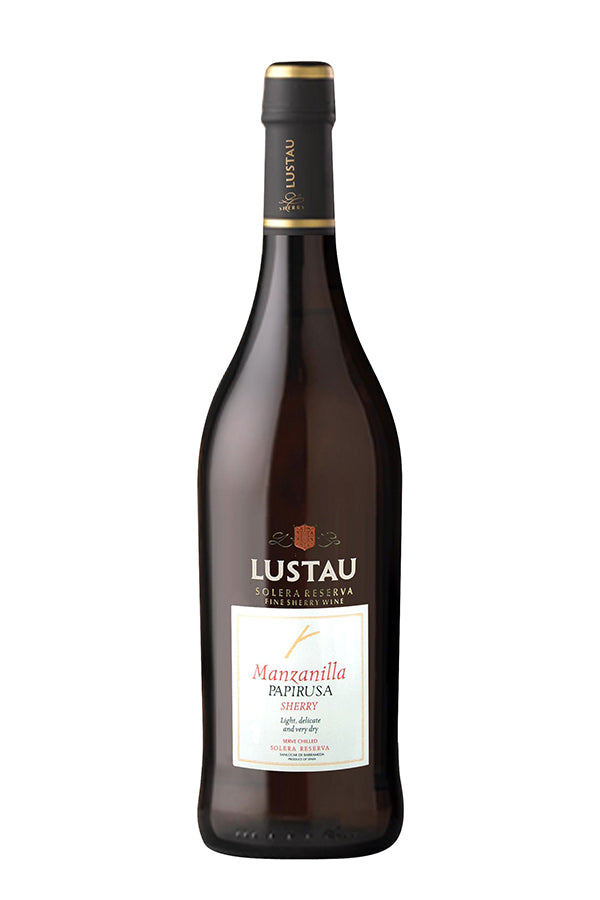
Emilio Lustau Light Manzanilla Papirusa Sherry
Couldn't load pickup availability
Emilio Lustau Light Manzanilla Papirusa Sherry
*Availability may vary. Images are for reference only. Design may vary.
Description
Description
Emilio Lustau Light Manzanilla Papirusa Sherry is a bone-dry, biologically aged Manzanilla from Sanlúcar de Barrameda, bottled at 15.5% ABV in a 750ml format. It earned an exceptional 97 points at the 2021 Decanter World Wine Awards, reinforcing its status as one of the benchmark expressions of the Manzanilla style.
Quick Facts: ABV: 15.5% | Origin: Sanlúcar de Barrameda, Spain | Average 5 Years Under Flor | Producer: Bodegas Cuevas Jurado for Lustau
Production & Heritage
Emilio Lustau, founded in 1896, is one of the most respected sherry houses in the Jerez Triangle. Papirusa is produced by Bodegas Cuevas Jurado — an almacenista (small, independent producer) — and selected, blended, and bottled by Lustau under its renowned almacenista program, which helped revive interest in artisanal sherry production. Made from 100% Palomino grapes, the wine ages biologically under a continuous veil of flor yeast in a traditional solera system for an average of five years. The bodegas sit in the coastal town of Sanlúcar de Barrameda, where the humid, salt-laden maritime air keeps flor especially vigorous and imparts the briny, saline signature that distinguishes Manzanilla from Fino sherries produced inland.
Tasting Notes
Aroma: The nose opens with pronounced flor yeast and chamomile, followed by roasted cashews, walnut husks, and a subtle thread of green banana. A faint sea breeze quality ties everything together, hinting at the coastal aging environment.
Taste: The entry is crisp and razor-dry, with immediate salinity and clean almond flavor. Mid-palate, lemon peel and green apple emerge alongside a gentle yeasty nuttiness. The texture is light-bodied yet surprisingly layered, with pungent, focused flavors that show real finesse.
Finish: The finish carries good length for a Manzanilla, tapering with lingering cashew, a whisper of toast, and persistent mineral salinity. It closes clean and refreshing, inviting another sip.
How to Drink Papirusa
Serve well chilled — between 6°C and 8°C — in a copita or white wine glass to concentrate the delicate flor aromatics. Once opened, treat it like a white wine: refrigerate and consume within a few days for peak freshness.
- Rebujito: The classic Sanlúcar summer cocktail — Manzanilla, lemon-lime soda, fresh mint, and ice. Papirusa's salinity and dryness keep the drink from becoming cloying.
- Sherry Cobbler: Shaken with orange slices, sugar, and crushed ice, this 19th-century classic showcases the wine's nutty, citrus-peel character.
- Bamboo Cocktail: Equal parts Manzanilla and dry vermouth with dashes of Angostura and orange bitters — the saline backbone of Papirusa adds structure and complexity.
Best For
- Introducing someone to the world of sherry and fortified wines
- Pre-dinner aperitif service alongside tapas or charcuterie
- Pairing with a seafood-focused dinner party
- Building a well-rounded home bar with essential fortified styles
Frequently Asked Questions
What does Papirusa taste like? Papirusa is bone-dry with prominent sea salt, chamomile, roasted almond, and green apple flavors, underscored by a distinctive flor yeast character. It is light-bodied and crisp, with a refreshingly saline finish.
How does Papirusa compare to La Ina Fino? La Ina is a Fino aged in Jerez de la Frontera, which tends to produce a rounder, slightly less saline profile, while Papirusa, as a Manzanilla from Sanlúcar de Barrameda, leans more briny and maritime. Both are excellent examples of biologically aged sherry, but Papirusa's coastal influence gives it a sharper, more mineral-driven edge.
Is Papirusa good for beginners? Yes — its clean, light body and refreshing salinity make it one of the most approachable styles of sherry, especially when served well chilled alongside food. The 15.5% ABV sits lower than many fortified wines, further easing the introduction.
Where is Papirusa made? Papirusa is produced by Bodegas Cuevas Jurado in Sanlúcar de Barrameda, a coastal town at the mouth of the Guadalquivir River in Andalusia, Spain. It is selected and bottled by Emilio Lustau, one of the leading sherry houses in the Jerez Triangle.
What foods pair well with Papirusa? Briny oysters and raw shellfish mirror its saline character. Marcona almonds and green olives echo the nutty, bitter-edged palate. Lightly fried fish (pescaíto frito) or shrimp tortillitas complement the wine's crispness. Jamón ibérico provides a rich, savory contrast. Fresh goat cheese with herbs highlights the chamomile and citrus notes.
What sizes does Papirusa come in? Papirusa is widely available in the standard 750ml bottle and is also commonly found in a 375ml half-bottle format.
Is Papirusa worth the price? Papirusa positions as a mid-range Manzanilla that delivers well above its price tier, particularly given its 97-point Decanter score and consistent critical acclaim from Robert Parker (92 points) and Wine & Spirits (92 points). For the quality of a five-year solera-aged wine from a respected almacenista, it represents strong value within the fortified wine category.
Why Papirusa?
The 97-point score from the 2021 Decanter World Wine Awards places Papirusa among the most critically acclaimed Manzanillas available today. Its origin in Lustau's almacenista program means it comes from a small, specialist bodega — Cuevas Jurado — rather than a mass-production facility, giving it an artisanal provenance rare at this price point. The average five years of biological aging under flor in the salt air of Sanlúcar produces a depth and saline complexity that many younger Manzanillas cannot match. For anyone seeking a serious, food-versatile fortified wine rooted in one of Spain's most distinctive winemaking traditions, Papirusa consistently delivers.
Specifications
Specifications
-
Varietal/Type
-
Product of
-
Size
-
Brand
Payment & Security
Payment methods
Your payment information is processed securely. We do not store credit card details nor have access to your credit card information.
New Arrivals
-
 New arrival
 -
-

-


Cutwater
Cutwater Gingerbread White Russian 4PK
In stock4PK 12OZ Cans$12.99Unit price /Unavailable -

-

-


-

 Sold out


