
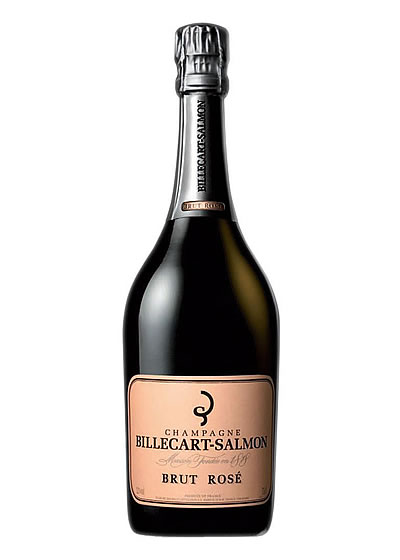
Billecart Salmon Brut Rose
Couldn't load pickup availability
Billecart Salmon Brut Rose
*Availability may vary. Images are for reference only. Design may vary.
Description
Description
Billecart-Salmon Brut Rosé is a non-vintage pink Champagne blended from Chardonnay, Pinot Noir, and Pinot Meunier at 12.5% ABV in a 750ml bottle. Awarded 93 points by Robert Parker's Wine Advocate and 94 points from Jeb Dunnuck, this cuvée has long been regarded as one of the defining rosé Champagnes in production — a reputation built on a distinctive cold-macerated red wine component sourced from some of the oldest Pinot Noir vines in Mareuil-sur-Aÿ.
Quick Facts: ABV: 12.5% | Origin: Vallée de la Marne, Champagne, France | Non-Vintage Brut Rosé | Producer: Champagne Billecart-Salmon
Production & Heritage
Champagne Billecart-Salmon was founded in 1818 in Mareuil-sur-Aÿ and remains family-owned after more than two centuries — a rarity among major Champagne houses. The Brut Rosé is produced using the assemblage method, blending base wines of 40% Chardonnay, 30% Pinot Noir, and 30% Pinot Meunier with a small proportion of still red Pinot Noir wine. That red wine component is what truly distinguishes this cuvée: it comes from massal-selected Pinot Noir plots aged 60 to 80 years in the house's home village, picked at 12% potential alcohol and cold macerated before fermentation. This meticulous process both defines the wine's pale salmon hue and precise fruit character, and inherently limits production volume.
Tasting Notes
Aroma: The nose opens with fresh wild strawberry and ripe peach skin, layering into red and white flowers, a hint of cinnamon, and the faintest suggestion of baking bread. There is an immediate finesse — delicate rather than forceful, drawing you in rather than announcing itself.
Taste: On entry, the mousse is ultra-fine and creamy, carrying flavors of sour cherry, redcurrant, and citrus zest across the palate. The mid-palate broadens with ripe wild strawberry and a touch of tropical fruit, supported by lively acidity that gives the wine exceptional definition and lift. There is a rounded, silky texture throughout, but the wine never loses its taut freshness.
Finish: The finish is long and well-structured, resolving into chalky minerality, raspberry, and a juicy persistence that invites the next sip. It is light and vinous without heaviness — a hallmark of Billecart-Salmon's restrained, elegant house style.
How to Drink Billecart-Salmon Brut Rosé
This Champagne is at its best served well chilled, around 8–10°C (46–50°F), in a white wine glass or tulip flute that allows its subtle aromatics to develop fully. It stands beautifully on its own as an aperitif but also has the structure to carry through a meal. A French 75 made with this rosé instead of the traditional blanc adds strawberry complexity and an elegant blush. In a Kir Royale, use only a bare whisper of crème de cassis — the wine's own red-fruit character needs little supplementation. For a summer serve, try it in a Champagne Cocktail with an Angostura-soaked sugar cube and a lemon twist, where the wine's acidity and mousse provide a dynamic backbone.
Best For
- Celebrating an anniversary or milestone dinner with a refined, universally admired Champagne
- Gifting a wine lover who already knows the major houses and will appreciate a benchmark rosé
- Serving as a sophisticated aperitif at an intimate gathering or holiday table
- Pairing with a multi-course meal featuring seafood or lighter charcuterie
Frequently Asked Questions
What does Billecart-Salmon Brut Rosé taste like? It delivers wild strawberry, sour cherry, and redcurrant flavors carried by an ultra-fine mousse, with lively acidity and a long, chalky-mineral finish. The overall impression is one of finesse and restraint rather than overt fruitiness.
How does Billecart-Salmon Brut Rosé compare to Laurent-Perrier Rosé? Laurent-Perrier Rosé uses the saignée method (short skin contact) for its color, producing a darker, more fruit-forward style, while Billecart-Salmon uses the assemblage method with cold-macerated still red wine, resulting in a paler hue and a more delicate, structured profile. Both are widely considered the two benchmark non-vintage rosé Champagnes, but they represent different stylistic philosophies.
Is Billecart-Salmon Brut Rosé good for sipping neat? Absolutely — its fine mousse, layered aromatics, and long finish make it one of the most satisfying rosé Champagnes to drink on its own, chilled and without embellishment. It is equally rewarding paired with food.
Where is Billecart-Salmon Brut Rosé made? It is produced by Champagne Billecart-Salmon, headquartered in Mareuil-sur-Aÿ in the Vallée de la Marne sub-region of Champagne, France. The house has operated from this village since its founding in 1818.
What foods pair well with Billecart-Salmon Brut Rosé? Seared salmon or tuna tartare highlight its red-fruit character and crisp acidity. Duck rillettes or prosciutto complement its subtle savory undertones. Fresh strawberries with cream echo the wine's core aromatics. Soft-ripened cheeses like Brie or Chaource match its creamy mousse. Sushi and sashimi, particularly with fatty fish like hamachi, play well against the wine's structure and citrus zest notes.
What sizes does Billecart-Salmon Brut Rosé come in? It is widely available in the standard 750ml bottle and is also produced in 375ml half-bottles and 1.5L magnums, depending on market availability.
Is Billecart-Salmon Brut Rosé worth the price? It positions as a premium non-vintage rosé Champagne, priced above most NV rosé bottlings but below vintage and prestige cuvées. With consistent critical acclaim — including 93 points from Robert Parker's Wine Advocate and 94 from Jeb Dunnuck — and a two-century pedigree, it represents strong value within its tier for the quality and reputation delivered.
Why Billecart-Salmon Brut Rosé?
The distinction here lies in specificity: the cold-macerated red wine drawn from 60- to 80-year-old massal-selected Pinot Noir vines in Mareuil-sur-Aÿ is a component few other houses can replicate, and it is the engine behind this wine's precise, restrained fruit profile. Consistent high marks from critics — 93 points from Robert Parker's Wine Advocate, 94 from Jeb Dunnuck, 96 from James Halliday Wine Companion — confirm that quality has held across multiple disgorgements. In a category often crowded with sweet, fruit-heavy rosés, Billecart-Salmon's version remains a study in elegance, balancing vivid red-berry character with chalky minerality and a mousse so fine it borders on ethereal. For anyone serious about Champagne, this is not simply a good rosé — it is the reference point against which others are measured.
Specifications
Specifications
-
Varietal/Type
-
Product of
-
Region
-
Size
-
Brand
Payment & Security
Payment methods
Your payment information is processed securely. We do not store credit card details nor have access to your credit card information.
New Arrivals
-
 Sold outNew arrival
 -
New arrival
-

 New arrival
Winglore
Winglore Single Barrel #7 Bourbon 750ML
Very low stock750ML$94.99Unit price /Unavailable -
Sold outNew arrival
Winglore
Winglore Nickel on the Grass American Single Malt 750ML
750ML$89.99Unit price /Unavailable -
New arrival
-
 New arrival
 -
New arrival
Winglore
Winglore Bogey Dope Solo Bourbon 750ML
Very low stock750ML$99.99Unit price /Unavailable -

 New arrival


