

Few Spirits Bourbon Whiskey 750ML
Couldn't load pickup availability

Few Spirits Bourbon Whiskey 750ML
*Availability may vary. Images are for reference only. Design may vary.
Description
Description
Few Spirits Bourbon Whiskey 750ML is a 93-proof Illinois craft bourbon (45% ABV, 750ml) distilled in Evanston from a high-rye mashbill and fermented with Belgian Saison yeast. Scored 89 points by The Whiskey Wash, this expression stands out for its unconventional production choices — from locally sourced grains to small-format Minnesota oak barrels that accelerate extraction and amplify character.
Quick Facts: ABV: 45% (90 Proof) | Origin: Evanston, Illinois, USA | Style: High-Rye Bourbon | Distillery: FEW Spirits Distillery
Production & Heritage
FEW Spirits Distillery was founded in Evanston, Illinois — a city that was famously dry for nearly a century and served as the birthplace of the American temperance movement. The distillery's name nods to Frances Elizabeth Willard, the temperance leader who once called Evanston home. FEW Bourbon uses a mashbill of 70% corn, 20% rye, and 10% two-row malted barley, with all grains sourced from farms within a 100-mile radius of the distillery. What truly distinguishes the production is a peppery Belgian Saison-style yeast typically reserved for farmhouse ales, which introduces spice complexity during fermentation. The spirit is then aged in small barrels ranging from 5 to 30 gallons, constructed from Minnesota oak — a wood with a shorter growing season and tighter grain than traditional American white oak, resulting in more concentrated wood interaction and a distinctive tannic structure.
Tasting Notes
Aroma: Cinnamon and clove arrive first, followed by fresh hay and a gentle wave of corn sweetness. Underneath, oak and a faint peppery note from the Saison yeast emerge with time in the glass.
Taste: The entry is rich with caramel and Demerara sugar, coating the palate with a lush sweetness that quickly gives way to mid-palate spice — cinnamon, nutmeg, and cracked black pepper from the high rye content. Pine needle resin and vanilla develop toward the peak, adding layers of complexity that reveal the Minnesota oak's influence.
Finish: Medium in length with a dry, slightly tannic texture and lingering warmth. Baking spice and toasted oak fade slowly, leaving a trace of sweet corn and clove.
How to Drink FEW Bourbon
Neat or with a few drops of water is the best way to appreciate the interplay between Saison yeast character and tight-grained Minnesota oak. The 45% ABV holds up well over a single large ice cube without losing definition. For cocktails, consider an Old Fashioned, where the bourbon's built-in spice complexity means you need little more than a sugar cube and bitters. A Bourbon Smash works well here — the fresh herb and lemon notes complement the pine needle and hay aromatics. It also performs admirably in a Paper Plane, where the high-rye backbone and peppery finish cut through the Aperol and amaro with authority.
Best For
- Craft spirits enthusiasts exploring the Illinois whiskey scene
- Gifting to someone who values grain-to-glass provenance and local sourcing
- Side-by-side tastings comparing traditional Kentucky bourbon against Midwest craft production
- Home bartenders building spice-forward Old Fashioneds and Manhattans
Frequently Asked Questions
What does FEW Bourbon taste like? FEW Bourbon delivers rich caramel and Demerara sugar sweetness balanced by prominent baking spice — cinnamon, nutmeg, and black pepper — with supporting notes of pine needle, vanilla, and toasted oak.
How does FEW Bourbon compare to Buffalo Trace? Both are approachable bourbons at similar price points, but FEW Bourbon leans noticeably spicier due to its 20% rye content and Saison yeast fermentation, while Buffalo Trace tends toward a softer, more fruit-and-toffee-driven profile. FEW also uses small-format Minnesota oak barrels rather than standard 53-gallon barrels, producing more concentrated wood influence.
Is FEW Bourbon good for sipping neat? Yes — the 45% ABV is well-balanced for neat sipping, and the layered spice from the Saison yeast and high-rye mashbill rewards slow exploration without excessive heat.
Where is FEW Bourbon made? FEW Bourbon is distilled at FEW Spirits Distillery in Evanston, Illinois, located just north of Chicago. The distillery sources all its grains from farms within a 100-mile radius.
What foods pair well with FEW Bourbon? Smoked pork ribs complement the bourbon's caramel and oak character. Dark chocolate with sea salt mirrors the sweet-spice balance. Sharp aged cheddar contrasts the corn sweetness nicely. Pecan pie echoes the nutty, Demerara sugar notes. Charcuterie boards with cured meats and whole-grain mustard play well against the peppery rye influence.
What sizes does FEW Bourbon come in? FEW Spirits Bourbon Whiskey is available in the standard 750ml bottle size.
Is FEW Bourbon worth the price? FEW Bourbon positions as a premium craft bourbon, priced above mass-produced alternatives but justified by its grain-to-glass local sourcing, unconventional Saison yeast fermentation, and small-barrel aging in Minnesota oak — production choices that larger distilleries simply do not replicate at scale.
Why FEW Bourbon?
FEW Bourbon earns its reputation not through age or volume but through deliberate, uncommon production decisions. The use of Saison-style brewing yeast is virtually unheard of in American bourbon distillation and introduces a peppery spice layer that sits distinct from typical rye-driven heat. Small-format Minnesota oak barrels with tight grain deliver concentrated wood character in less time, while the 100-mile sourcing radius gives the whiskey genuine terroir — a concept still rare in American whiskey. For drinkers interested in how production choices shape flavor, FEW Bourbon is one of the most transparent and instructive bottles in the craft category.
Specifications
Specifications
-
Varietal/Type
-
Product of
-
Region
-
Size
-
Proof
-
Brand
Payment & Security
Payment methods
Your payment information is processed securely. We do not store credit card details nor have access to your credit card information.
New Arrivals
-
 New arrival
 -
New arrival
-
 Sold outNew arrival
 -
New arrival
-
Sold outNew arrival
Hop Butcher for The World
Hop Butcher New School Hawaii Vibes 4Pk
4PK 16OZ Cans$16.99Unit price /Unavailable -
 New arrival
 -
New arrival
Phase Three
Very low stock4PK 16OZ Cans$17.99Unit price /Unavailable -

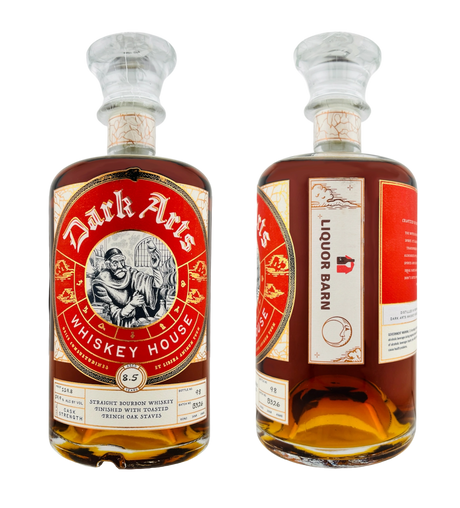
Dark Arts
Dark Arts Toasted French Oak Cask Strength 8.5 Year Liquor Barn Single Barrel 750ML
In stock750ML$109.99Unit price /Unavailable


